
AI can generate almost anything, but it can't manufacture the reason a person leans in. And that's the only advantage that compounds.
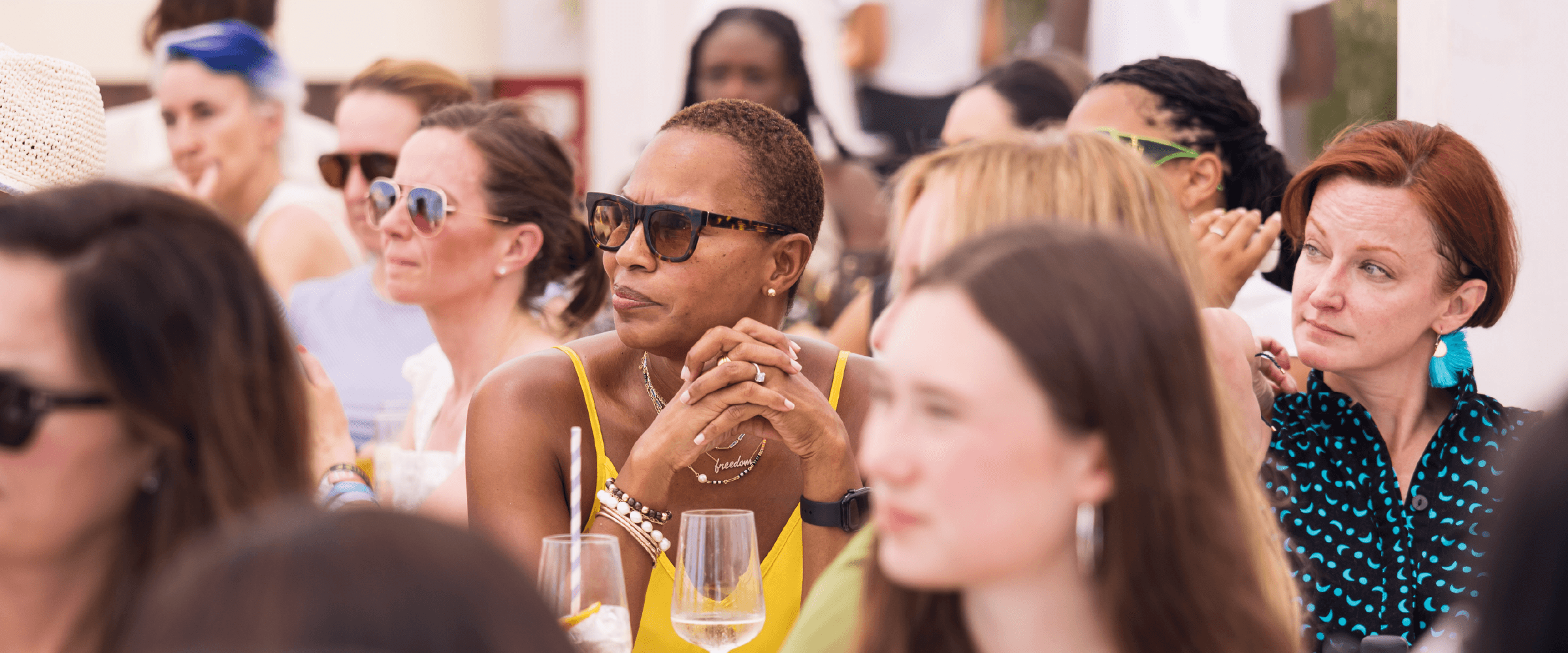
Photo Credit: Chief - Chris Lammert Photography
I hadn't been to Cannes since before I had kids. The evenings still turned cool back then. You could walk the Croisette without a fan, and the beaches that mattered belonged to the holding companies, Google, and Twitter. Twitter. That's how long it had been.
This year, the old names are mostly gone from the sand. PMG ran an AI and Tech Sandbox. Canva built a cabana for the creators. News outlets like The Wall Street Journal and Adweek, and communities like The Female Quotient, dominated programming. Community, in many ways, had the best real estate on the Croisette, because it was everywhere.
The conversation changed, too, and not the way you'd expect in the most AI-soaked year yet. It used to bend heavily toward creativity and creative outcomes. This year, it kept bending back toward people. When a machine can hand you almost anything on demand, including the creative asset, what people want is the opposite of infinite. They want to choose where their attention goes, and they want real connection waiting on the other side of the choice.
The shift I felt everywhere
For years, the industry treated relationships like a performance problem. Set the tiers, tune the points, optimize the sends, report the output as loyalty. What I heard this year was different, and it was a relief. People are finally naming it. Loyalty is a relationship, and it starts the moment someone feels seen. Relationships don't stay one-to-one, either. Done right, they compound into community.
One of the clearest examples came from PacSun, which has built a standing advisory community of its own customers to stay close to the people it serves. The payoff is the ripple. People who feel like insiders pull others in, and the connection widens on its own.
I heard the same thing from an unlikely place, over a long talk with an old friend who works at Walmart. Walmart sits on more customer data than almost any other business. But what we talked about wasn't the data. It was Gen Z, and how they want something that runs both ways, which we also saw in our recent brand loyalty study. They can feel the difference between a brand that sees them and one that's tracking them. What stuck with me is how little it takes to make a person feel recognized. One honest, well-timed act of recognition travels further than any rewards structure ever built. Get it right and it keeps moving, person to person, long after the moment itself.
Why experience holds its value
Recognition like that doesn't happen in the abstract. It happens inside an experience. And AI is about to sit inside nearly every experience we create. But when the technology can generate almost anything, that alone won’t be enough to set you apart. What's left is the experience itself. How it feels. Whether a person trusts it enough to stay.
Trust in AI is still conditional. People aren't rejecting it, but they aren't willing to hand it everything either. They draw a line that moves with the stakes. The moment engagement with AI turns consequential is the moment we don't want to give up control. For leaders, this nuance reframes the question, from, “How much can we automate?” to, “Where do people actually want AI in their lives?”.
Underneath it all, people kept circling the same thing: the human side of adoption. How people will actually use AI, how much they'll trust it, and how will that shift over time? The honest read from both the industry and our own research is that we're early. Right now, AI is sitting on the lowest rung of the AI version of Maslow's Hierarchy: is this useful, does it make my day easier? Nail that and it earns the right to become something bigger. Miss it and trust erodes. The sharpest people I talked to were watching the technology closely, and are letting the people set the pace of change.
The part we haven't built yet
The other word you couldn't escape this year was moat, almost always attached to data. Bigger sets, owned stacks, cleaner identity. Useful, all of it. But data is a record of what people did in the past. It doesn’t reveal why they did it, and the why is the part that lets you make a real bet when everything is moving this fast.
That's the shift I'm most interested in building toward. We spent a decade getting very good at measuring what happened. The next decade belongs to whoever gets good at understanding why. The reasons under the behavior, not just the behavior itself. Optimize for what performs versus what people want, and you’ll quietly steer toward the safest, most forgettable version of your brand. You perform your way into the middle and call it strategy.
Knowing what you stand for matters more now than ever. The same tools that let us reach one person at a time can pull a brand off its center one decision at a time. Purpose is what holds the line. It was always the real measure of good creative work, the kind that connects a business to people and people back to it. Now, it's just easier than ever to lose.
What doesn't change
So here's where I land, after years away from the Croisette. The names on the beach will change, as they always do. Next year, there will be a new activation you supposedly can't miss, and the technology will be faster than it is today.
But Cannes itself is a lesson in what people everywhere are actually after. Connection. Understanding. The freedom to choose where their attention goes, and to find someone on the other side who sees them. That doesn't change from one year to the next.
Everyone is racing to build a moat, most of them out of data. But the moat was never the historical data. It's whether you understand the human it came from. That you see them and make them feel seen. That's something the machines can't generate for you, and it's the only advantage that compounds.